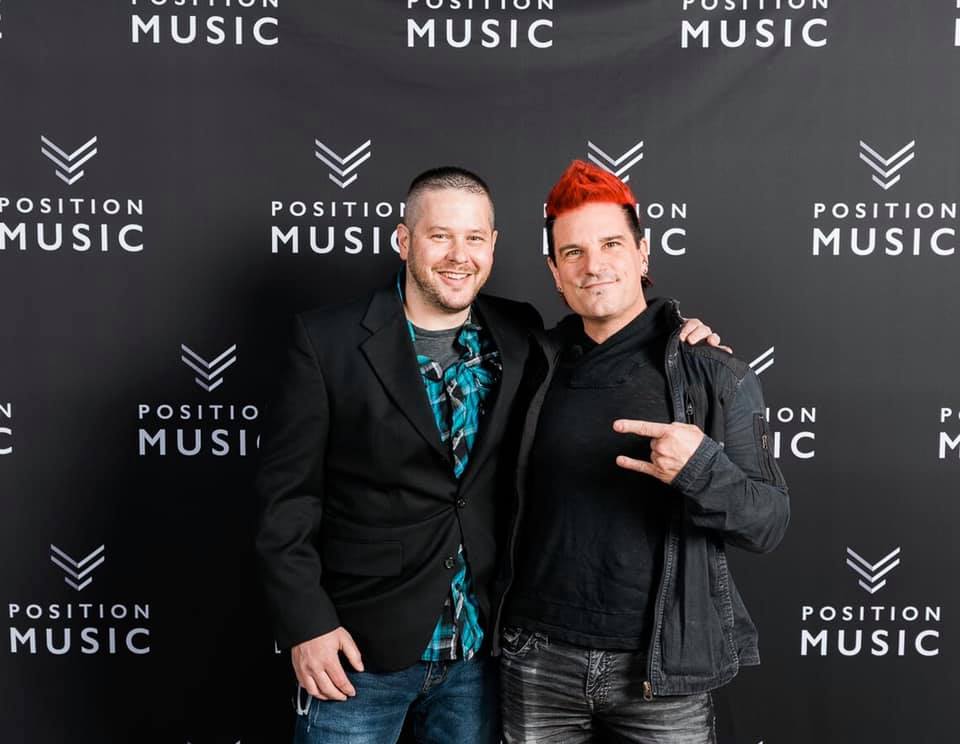
- When you look at FiXT today, what does it represent? Not just historically, but as it exists right now?
FiXT is at an inflection point. We’re celebrating 20 years, but more importantly, we’re stepping into a new era: and we’re doing it with clearer eyes than we’ve ever had.
Over the last two years or so, we strategically downsized our roster to focus and go deeper with fewer artists.That worked in some ways, the artists we focused on saw real growth, and we were able to give them increased resources that made a difference. But we learned something else as well; a smaller roster means fewer releases, and fewer releases means less momentum across the board.
So the next chapter is about rebuilding that roster intelligently, with everything we’ve learned across 20 years of navigating this industry.
That said, we’re not operating in a vacuum. Streaming has been a major driver for us — we were early adopters, and we rode that wave well. But we’re seeing fatigue in that ecosystem now, both from consumers and from the sheer volume of content flooding the platforms, including AI-generated music. That’s a real competitive pressure we’re not pretending isn’t there.
Our answer is to lean back into direct-to-fan engagement. Honestly, that takes us back to how FiXT started, that was the core of the first decade. In a lot of ways, we’re returning to our roots while applying everything we’ve built since. Being early, being forward-thinking, staying ahead of the curve. That’s always been the game plan, and it still is.
- When you look back to the label’s founding, what problem were you trying to solve that still feels relevant today?
FiXT started in 2006 because Klayton needed it to. After years of bad label deals, he went fully independent and then had to figure out how to actually survive as an independent artist. What he landed on were three pillars: distribution and the label side, merchandise, and publishing and sync licensing. Once he’d built those out for his own career and proved they worked, the logic was simple. If this model works for one independent artist, it should be scalable for others.
That’s the origin. Not a business plan, a solution to a real problem.
That problem hasn’t changed. Independent artists in 2026 still need exactly those three sides, the label infrastructure, the merchandise, and the licensing relationships. The tools have evolved, but the gap we’re built to fill is the same.
- How would you define FiXT’s identity in 2026 to someone encountering it for the first time?
FiXT’s identity is: record label, music publisher, and merchandise company. We’re a fully independent artist owned company. And we’re here to empower artists to build careers in ways not possible on their own by putting a world class team around them and helping them develop lifelong fan relationships. And that’s really it. That’s our mission statement and what we do.
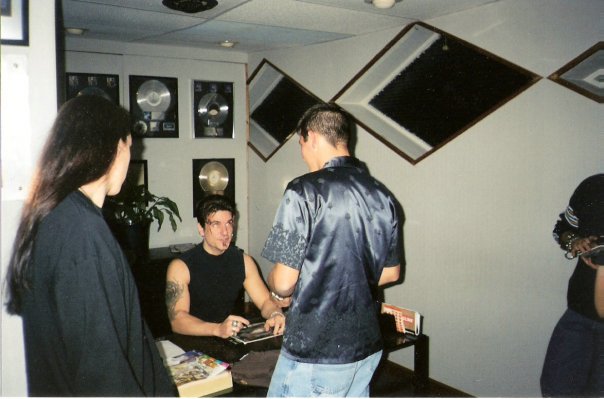
- FiXT began as something very specific. What core principle has never changed, even as everything else evolved?
There are a few, but the one that’s defined us most is this: we’re not in the business of making rock stars. We’re in the business of building careers. Those are two very different things.
Over the years we’ve encountered incredibly talented artists where it became obvious pretty quickly that music was a lifestyle vehicle for them, not a profession. The cliché exists for a reason. And that was never our path. Artists who weren’t operating from some basic set of business principles never really meshed with what we were building. We either parted ways or didn’t sign them at all. That’s kind of been a principle that’s been there all along.
But some other answers you might expect include that we’ve always had a really high production quality bar. So within the genre lanes that we operate in, we have a very particular production quality that we expect that we’ve come to be known for and that hasn’t changed, in twenty years.
- What’s something about FiXT today that would have been impossible to execute 20 years ago?
I mean, so much of what we’re doing now we couldn’t have done back then. In the early days we were very much dependent on a lot of gatekeepers and middlemen to go pitch to certain outlets. We just didn’t have the relationships. Twenty years ago there were a lot more gatekeepers. Today the industry has gotten more accessible.
We’ve negotiated direct deals with DSPs and platforms, joined organizations like Merlin and A2IM, and built the kind of relationships that let us go directly to Spotify or Apple, not through an intermediary, not hoping someone passes our pitch along.
- How has your role shifted from building the foundation to shaping the future?
When the company started, even though I was “co-founder”, I really had no intent or expectation to be the president of the label or to be a label executive one day. I was employee number one, entry level, figuring things out alongside and for Klayton.
The title evolved slowly. For a long time I was General Manager which felt accurate, because even as the de facto number two in the company, I wouldn’t have called myself a label executive. We were small..
What changed was deliberate investment in growth; specifically mine. About five years ago, Klayton approved putting me through a year-long executive coaching and business accelerator program. That was a real inflection point. Within about a year of completing it, we doubled the revenue of the company. I think a meaningful part of that was directly connected to what I learned and was able to implement.
Over twenty years, we’ve really built out a team and developed the experience and the relationships to where we’re interacting with some of the most respected independent labels in our genres, and doing so as contemporaries.
- FiXT sits at the intersection of art and industry. How do you balance creative integrity with scalability?
There’s always tension between the artistic side and the business side. Klayton still says it in meetings to this day: we’re not doing this for the money. So while we have to run a profitable, sustainable business, it’s never been about chasing the bottom dollar.
Over the years, sometimes to our detriment, we’ve gotten excited about projects that were so niche they were never going to scale. We still do that from time to time because we want to be seen as tastemakers who care about art, not just a label chasing dollars. So we run some projects that flex a lot more toward the artistic side, and others built more for broader appeal and growth.
The tension shows up with artists too. Scaling a business means marketing, promotion, social media, the unglamorous work of finding an audience, and not every artist wants to live in that world.
But for us it starts with the art. There has to be world-class artistry we believe in first. Then we bring the business acumen to scale it as far as it’ll go.
- What does “noise” mean to you in a broader sense? Beyond music?
Twenty years of noise… we have worked across multiple genres from electronic rock, what we call future rock and industrial, to the synthwave side and darksynth to indie pop. And we’ve done lots of EDM subgenres that are mostly more aggressive bass music or or drum and bass kind of influence.
So we have a sound and an aesthetic that is typically more aggressive, high energy, works very well in sci-fi video game kind of stuff. And then we just think this is the “new noise” that we’re into and that we’re finding cool stuff we’re into. We’re always trying to find artists that are pushing the boundaries of genre combinations and doing something unique and different. A lot of our music, even even our most popular music in the grand scheme of things, could still be considered underground and that we’re part of a subculture of music and not necessarily mainstream. But yet we’re able to find enough of an audience globally that can make it successful.
- How do you decide what belongs in the FiXT ecosystem today?
We’re looking for what I’d call “world-class” and that shows up on different levels. Production quality matters a lot; many of the artists we’ve worked with are self-produced but operating at a level high enough to stand out on its own. Others are exceptional songwriters first, and we pair them with producers and engineers who get the production where it needs to be.
What matters most is a unique voice; artists who aren’t just doing what everyone else is doing. When a sound connects in the mainstream, you get a hundred copycat bands that all sound the same. FiXT has always looked for the opposite. Take The Browning: he goes from metalcore and deathcore, into what he calls “rave metal,” bringing in heavy electronic elements most rock and metal acts wouldn’t touch. That’s been the throughline for us on the rock and metal side, not light electronic programming, which plenty of bands have done, but pushing it to an extreme that’s genuinely different.
We also want artists who keep evolving without losing what makes them recognizable. The Anix is a good example, if you know his music, you can pick any record of his out instantly. But album to album, he’s trying new things, pushing in different directions, never repeating himself.
- The music industry has transformed dramatically since you first started. What change had the most profound impact on how you operate the label?
A few stand out. The biggest, operationally, was moving from a traditional distributor to direct deals, taking control of our digital business instead of going through a middleman. That gave us the ability to pitch directly and run a much more creative release strategy than we could have otherwise.
The format itself has shifted under us too. We started in the CD era, watched downloads take over, then streaming overtook downloads as the dominant revenue stream. We were early adopters there. We were also early into building a one-stop catalog — masters and publishing under one roof — which gave us real advantages in sync licensing through the 2010s, though that world has gotten far more competitive since everyone’s chasing placements now.
And then there’s vinyl. We didn’t press our first record until 2015 with Celldweller: End of an Empire. Now we’re doing close to a vinyl release a month. More than half the people buying vinyl probably don’t even own a turntable; it’s become a collectible object, something to hold and read liner notes from. CDs, oddly, are starting to creep back too.
- FiXT has grown into a culture as much as a label. How would you describe that culture with your fans?
We’ve built FiXT not as a faceless label but as a brand fans connect with directly. A lot of people come in for one artist and end up discovering the whole roster, they like one act, then realize we’ve got ten others, and a lot of the time they end up fans of multiple artists, sometimes the whole lineup.
For years I packed and shipped every order from our online store myself. Now we have a team that handles it, and I have to go out of my way to look for these details. But one of my favorite things is still seeing an order with merch from four or five different artists on our roster in one cart. That’s the most satisfying proof that people aren’t just fans of one thing we put out, they’ve bought into the whole culture.
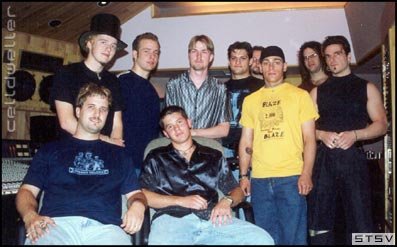
- What do you think artists gain from FiXT that they wouldn’t find elsewhere?
We do things differently, and that’s not just our take, it’s what artists and other industry people tell us. Start with the deal terms: we do 50-50 splits with our artists, where a lot of labels are still doing 80-20, 85-15, 82-18. We take pride in the fundamentals. A lot of labels still get the basics wrong: paying on time, sending statements, actually responding to messages. Those sound basic, but artists coming from other labels tell us constantly that they couldn’t get anyone on the phone, didn’t get paid, never saw a statement. Doing the fundamentals consistently well already sets us apart.
Beyond that, we’re more hands-on than most labels I know of. Our artists have real access to our team, we run a Discord server where they can reach the full staff in real time, 40+ hours a week. We run educational webinars, sometimes with outside industry experts, to help artists grow.
We don’t formally manage the artists on our roster, but we have a larger relationship with our artists than a lot of labels do as we’re also our artist’s publisher and merch partner all together. We’re pretty hands on and consistently go above/beyond to serve our artists needs. We bring in software and gear discounts, endorsement opportunities, help pitch our roster to booking agents and a number of those types of things, usually reserved for management. A lot of our artists never feel the need to seek outside management because so much of what they’d need is already covered here.
That comes from being genuinely in the weeds on the A&R side, understanding what an artist is actually trying to do, and when we can connect dots for them, introducing them to other people in the industry, etc.. we do it.
- How has FiXT’s culture evolved as the company matured?
For the first decade or so, it was organic, we were just figuring out whether we’d survive and be around for the long haul. By the second decade, we’d proven that to ourselves. Around 2020, we sat down for the first time and actually wrote out a formal mission statement and set of values. We read them at most of our team meetings and revisit them regularly. Repeating those values, keeping them present for the team, has helped build the culture into what it is now, the standards we aspire to across every part of the company.
- What perspectives did you and Klayton bring early on that still influence decisions today?
We’re an artist-owned, artist-focused company, and that’s rooted in Klayton’s own experience. Before FiXT, he went through multiple label deals over his first decade-plus as an artist and came away unhappy with how they treated him. That shaped what we wanted FiXT to be, the opposite of what he’d lived through.
Being artist-owned has driven a lot of choices over the years that other labels might not make. We’re a business, and we have to be sustainable and profitable, but we built the model around serving artists rather than artists serving us. We’re here to help them reach their vision, and in turn that helps us reach ours.
Klayton set the bar on quality, he has an incredibly high standard for production and a clear vision of what world-class looks like, and that’s driven the art side from day one. I brought more of the service side: good customer service, not just with our artists but with fans and customers. Michelle on our team took that early instinct and ran with it, to this day, customers get handwritten notes and thank-yous on their order slips. It’s a small thing, but it’s become a real touchpoint for fans.
We’ve also built in little unexpected moments, special thank-you messages from artists that show up in a customer’s email after they order. People have posted on social media about how fun their receipt was, which is a strange thing to find joy in, but if a little bit of humor in the text brightens someone’s day, that matters. We hear from artists about fans who say the music helped them through genuinely dark periods, and on the other end of that same spectrum, we’re just trying to find small ways, even something as minor as a receipt, to make someone’s day a little better.
- How has that original partnership model evolved as FiXT grew?
Twenty-plus years of running this company together has come down to trust and communication. A lot of businesses don’t make it that long — partners split, can’t get along, walk away. We’re still here. In the early years, Klayton and I were on the phone five-plus days a week, deep conversations every single day. As the company’s grown, that’s spread out some — we’re talking multiple times a week now instead of daily — but the trust runs deep enough that we don’t need to know every detail of what the other is handling. We trust each other to own our respective sides. It really does come down to trust and communication.
- Are there any decisions you made early on that you would approach differently today, given what you now know?
We’ve tried a lot of things over the years, and we’ve had plenty of failures along the way. If we had to make some of those same calls today, we probably wouldn’t go down those paths again but at the time, they made sense.
For a while we were the world’s largest EDM merch store, carrying everything from Deadmau5 to Porter Robinson to Tiësto, plus twenty or thirty other recognizable names in dance music. We bought and ran a hip-hop clothing line, technically a separate company, but we operated it under FiXT. At another point we became our own digital download store, working with distributors to offer around 100,000 independent tracks, not just our own catalog. Once streaming took over, competing on downloads in a streaming world stopped making sense, and that business quickly went away.
We also ran our own publicity agency at one point, had three full-time publicists handling PR for about twenty external clients a month, on top of the label’s own work.
Eventually we narrowed down to just being a label, publisher, and merch company. We still get the itch to chase interesting side ventures. Some of those didn’t last, but they may have been exactly what kept us alive long enough to get to the next phase.
We stay focused on Klayton’s vision and mine as the heads of the company. We have no plans to step back and hand this off to someone else and let it drift into something different. Twenty years in, I think we’ve still got a long runway ahead of us, continuing the same aesthetic and sensibility in the artists we look for, and continuing to attract fans who end up liking everything we put out. Making sure anything we sign aligns with that vision is what keeps it all cohesive.
- What does the next era of FiXT look like?
We’re going back to a larger roster, with both a rock and metal side as well as bringing more of the FiXT Neon synthwave and indie pop side back as well. We’ll keep building on our three core models: the label, our publishing and sync business, and merchandise and fan community.
Sync has gotten more competitive than it was in our early years, but we’ve been working behind the scenes, especially the last couple years, with new sync partners, and we’re excited to see some fresh growth there. We’ve had consistent music placements recently in WWE and UFC events and lots of other sports broadcasts (MLB, NHL, etc..).
The bigger shift is toward direct fan connection. We’re moving some away from as much streaming focus and putting more priority into deepening the relationship with fans directly. We’ve just launched a couple releases on a new platform called EVEN. It has the ease of use of a streaming experience, but built on a purchase model where fans actually own the music, with bonus content that brings them deeper into an artist’s world. That’s something we’re going to lean into heavily going forward.
18. How is AI shaping the way FiXT and your artists operate?
There are pros and cons. On the operations side, there are real efficiency gains, AI tools can help with files, data, spreadsheets, formatting, and the administrative side of running a label.
On the creative and authenticity side, it’s a different story. Almost every artist I’ve talked to finds these tools exciting and scary at the same time. There’s a lot of curiosity, everyone wants to know what these tools can do, but also real fear: will this replace me?, will platforms get flooded with AI output that crowds out real music? etc…
Part of what we want to do with our artists is make sure the art stays authentically theirs, not a prompt output. (For the record, we don’t accept or put out any generative AI created music.) But I think we now have to go further than that, we have to actively show people there was human authorship behind the work, because if you don’t, the accusation that “this is probably just AI” becomes something every artist has to face. We’ve seen that on recent releases that are 100% human made and fans are jumping into comments accusing it was AI made when it wasn’t. That means we’re pushing artists to be documenting the process: behind-the-scenes footage, interviews, content that shows the actual creative work happening.
Daedric is a good example of putting in the work of documenting their process. They just released an acoustic EP, and they put together a 40+ minute documentary showing the studio process, rewriting lyrics, reworking melodies and arrangement, the whole thing. Leaning into that kind of transparency does two things: it proves authenticity, and it gives fans something deeper to engage with. There’s a lot still up in the air with AI, new tools, new lawsuits, new developments daily. We’re keeping an eye on it and trying to stay ahead, but it’s moving fast. Time will tell what the full impact will be.
For more information on FiXT, visit: www.fixtmusic.com.