Celldweller Reveals New Detroit Studio: Blackstar
New Celldweller & Scandroid Albums In Progress
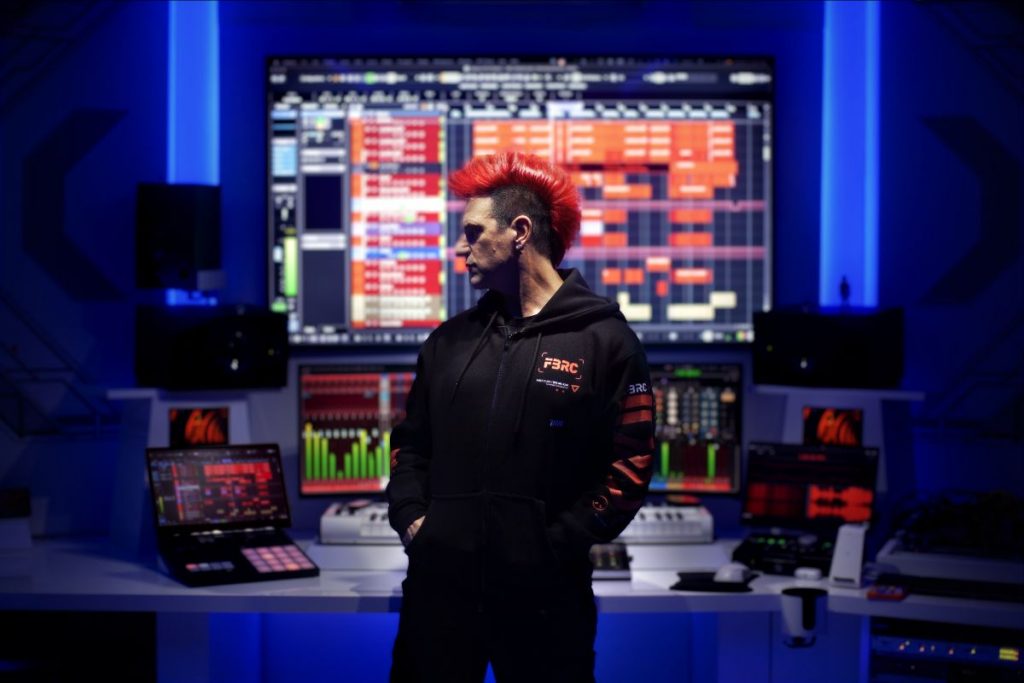
FiXT is proud to announce the unveiling of Blackstar, the new Detroit studio built by Klayton, the producer, songwriter, and multi-instrumentalist behind Celldweller, Scandroid, Circle of Dust, and FreqGen as well as owner/founder of the independent record label, FiXT. Conceived as the inside of a futuristic spaceship, Blackstar is Klayton‘s most ambitious creative space to date, and the environment where his next Celldweller and Scandroid albums are currently taking shape.
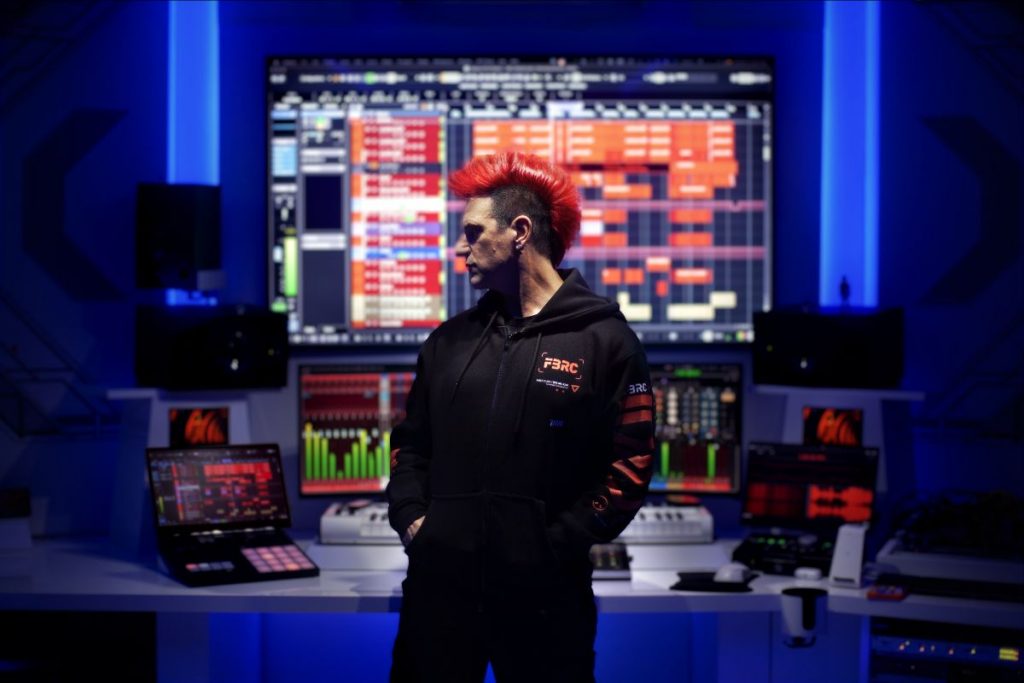
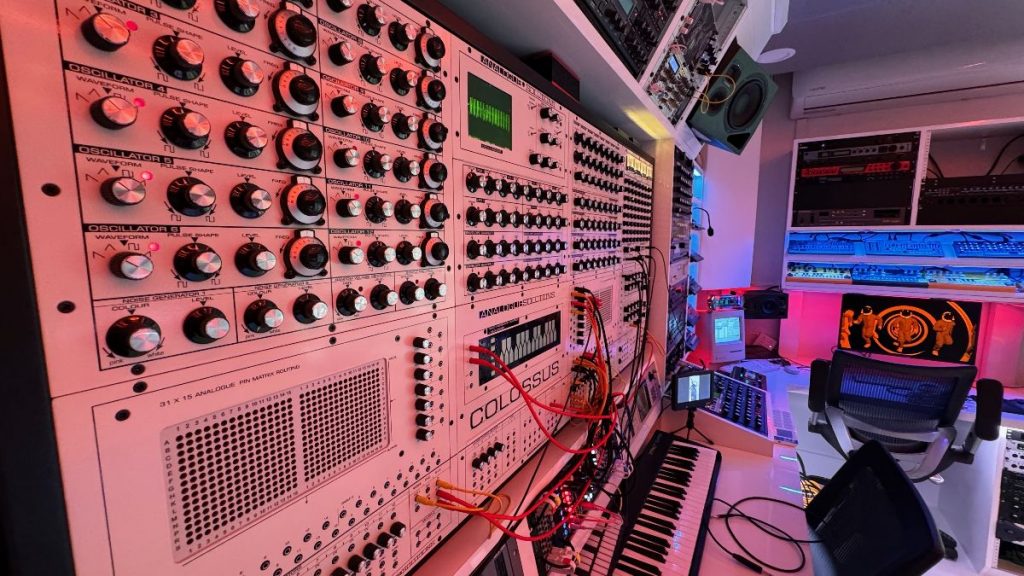
Known throughout the industry for his pioneering sound design and uncompromising production standards, Klayton designed Blackstar as a multi-room facility built for both writing and mixing at the highest level. The studio houses an expansive synth wall, a dedicated eurorack/5U modular wall, a guitar pedal wall, and a full analog station built around the Analogue Solutions Colossus Slim. Alongside this modern arsenal sits a collection of hardware, consisting of gear from Klayton’s early albums, including his original Mac Classic, Ensoniq EPS-16+ sampler, Alesis D4 drum module and E-MU Proteus/1 sound module.
“I spent a long time conceptualizing the ideal space for me to create in. I combined an aesthetic I like with a layout that could house the gear I have been accumulating for over 3 decades, into intentional workstations that each serve a specific function. I called in the talents of Ken Capton and Solar2, who built my previous studio in 2009. The build took several years and I’m now working full-tilt on the new Celldweller and Scandroid albums.” – Klayton, (Scandroid)
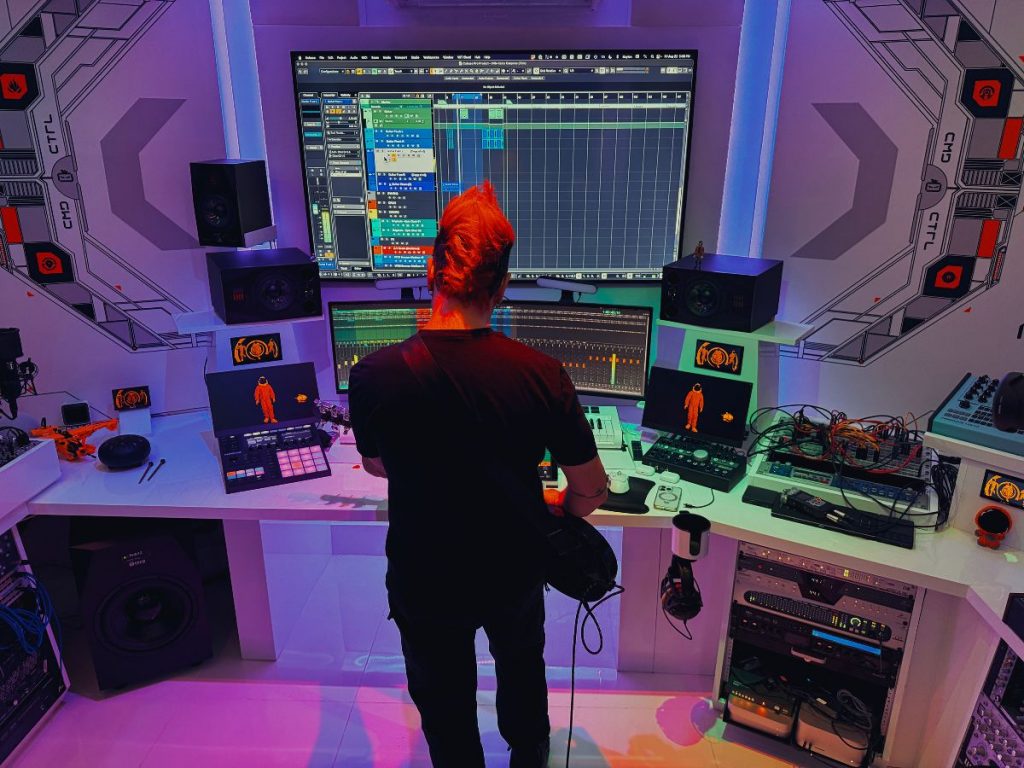
Blackstar is organized across several distinct rooms and creative workstations, each built around a specific function: CMD_CTRL (mix room), SANCTUM (multi-station synth/hardware room), AIR_LOCK (adjoining vocal/iso booth), and SALVAGE_BAY (legacy A/V room) all entirely connected by analog audio patch bays as well as featuring an impressive 24 screen video array controlled by a 100+ point HDMI patch bay. All rooms of the studio are connected by 8 iConnectivity mioXLs for flexible networked MIDI integration.
CMD_CTRL
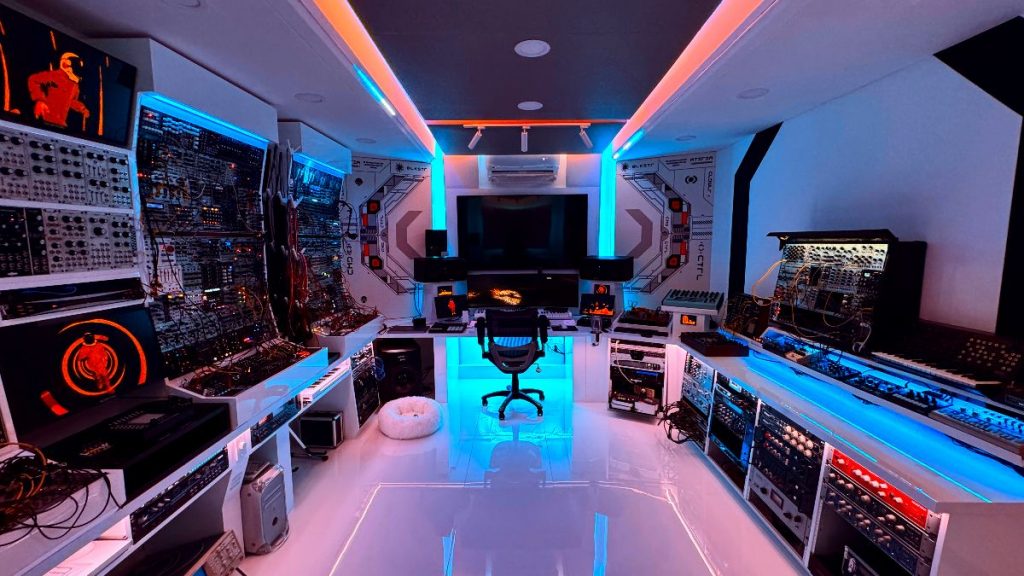
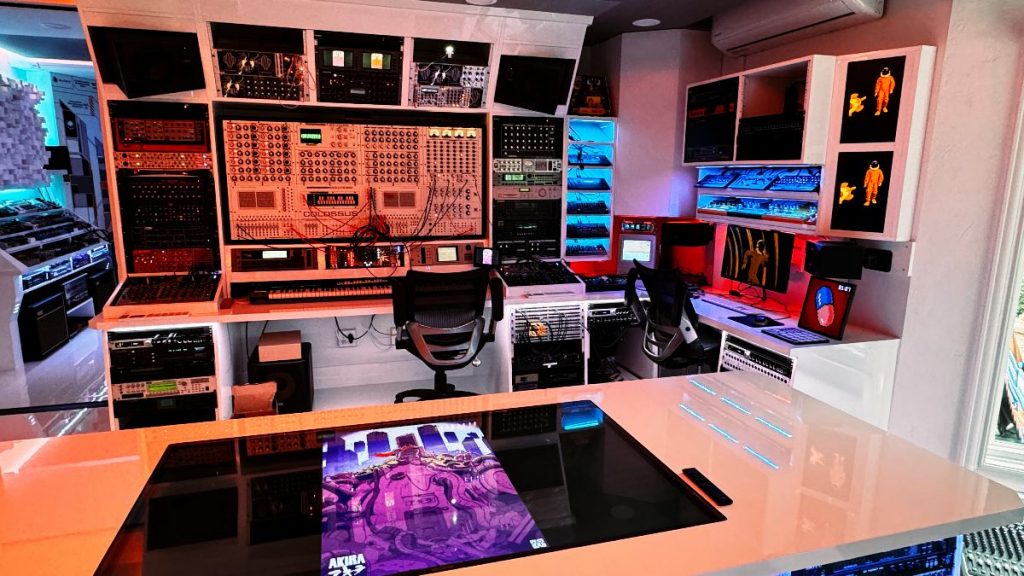
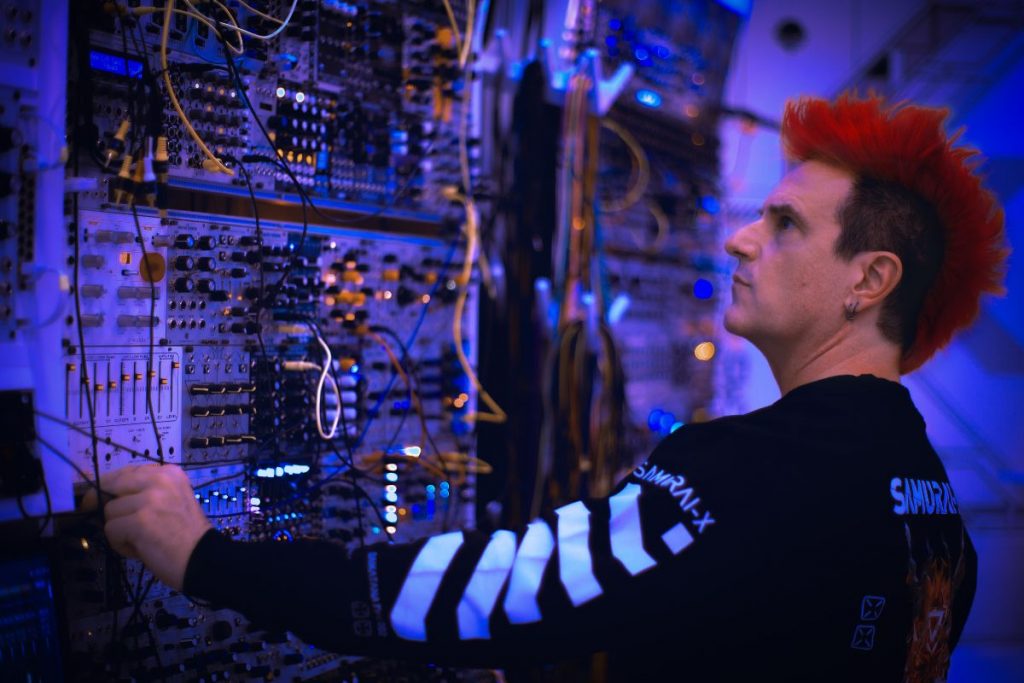
CMD_CTRL — The studio’s main mix room, anchored by Adam Audio monitoring and a massive modular wall with over 4,100 HP between Eurorack (including modules by Synthrotek, Make Noise, Qu-bit, Roland, Erica Synths, Pittsburgh Modular, Industrial Music Electronics, Intellijel, TipTop Audio, XAOC Devices, 4MS, Instruo, Schottkey, Tsyklon Labs, Cwejman, Doepfer, and Ohm Force) as well as 5U/Dotcom (Synthesizers.com and Modcan) systems. CMD_CTRL is built around a Mac Studio with dual Antelope Audio Orion 32+ and a MOTU 16A interface, rounded out with outboard gear including Avalon VT747, SP737 and a pair of U5s, SSL Sigma and XLogic Rack which includes the G Series compressor, Neve 1073s, the Overstayer Modular Channel, a pair of Empirical Labs Distressors, an LA2A, 500 series modules from Pendulum Audio, API, Helios and Moog as well as outboard gear from Lexicon, Electrix, Alesis and more.
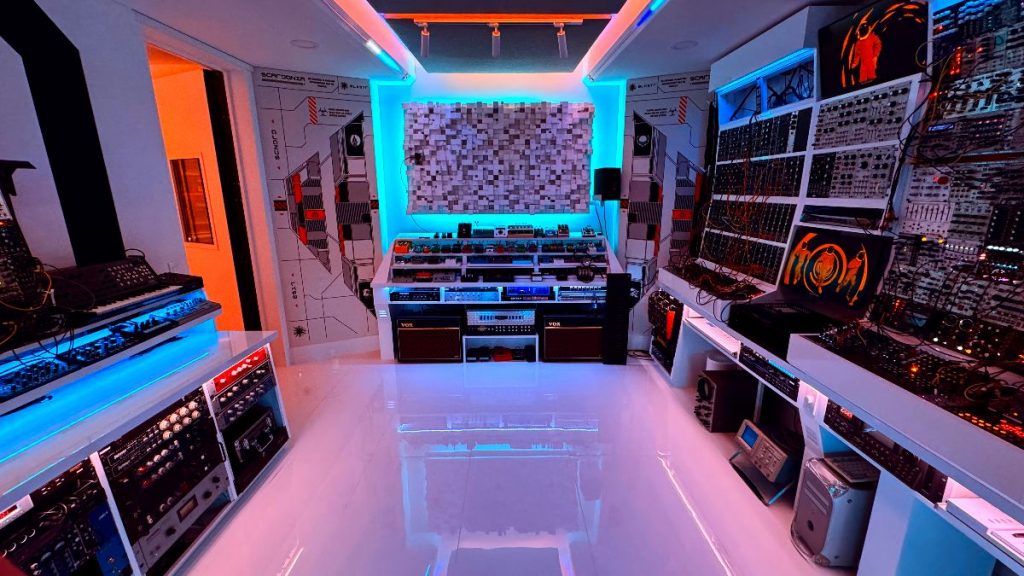
At the heart of ECHO_DISTORTION, the Guitar Pedal wall holds over 60+ pedals from companies including Earthquaker Devices, Roland, Chase Bliss, Electro-Harmonix, Boss, Strymon, Korg, Dwarfcraft Devices, KMA Machines, Eventide, Metasonix, Red Panda, DOD, Frantone, Meris, Source Audio, Rainger, Pure FX, and Gnomeratron, along with dual Vox amps, a Mesa Boogie Dual Rectifier, Soldano SP-77, a Marshall bottom and a Kemper Profiler. To drive all of Klayton’s pedals and amps, Klayton has a Fender VI 6 string bass, Squire Jazzmaster, Ibanez 7 string guitar, Takamine acoustic guitar, an Epiphone, Fender Strat, several Shechter Diamond series, a Line 6 Variax and others.
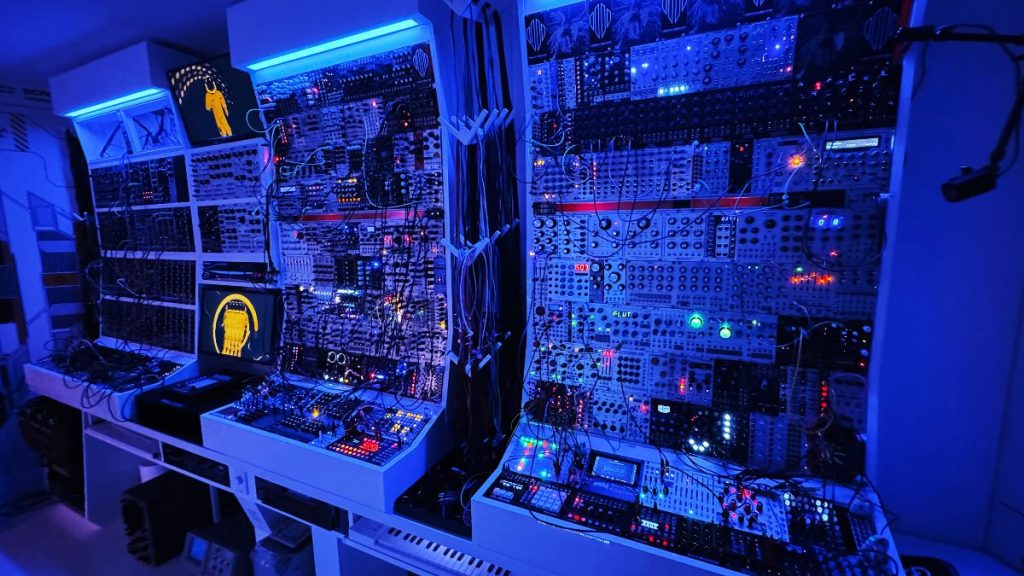
CMD_CTRL also features a select array of drum machines and synthesizers not found in SANCTUM, including Erica Synths Perkons, Syntrx II, Analogue Solutions Vostok 2020, Korg MS-20 mini, Elektron Analogue Heat, Retro Mechanical Labs Distortion Box, an original Roland TB-303 with Devil Fish and Quicksilver mods, an OTO Biscuit, Make Noise 0-Coast and Strega, Roli Seaboard Rise 25 and 49, E-MU E6400 Ultra sampler, Roland SVC-350 Vocoder, an original Moog Vocoder and more guitar pedals.
SANCTUM
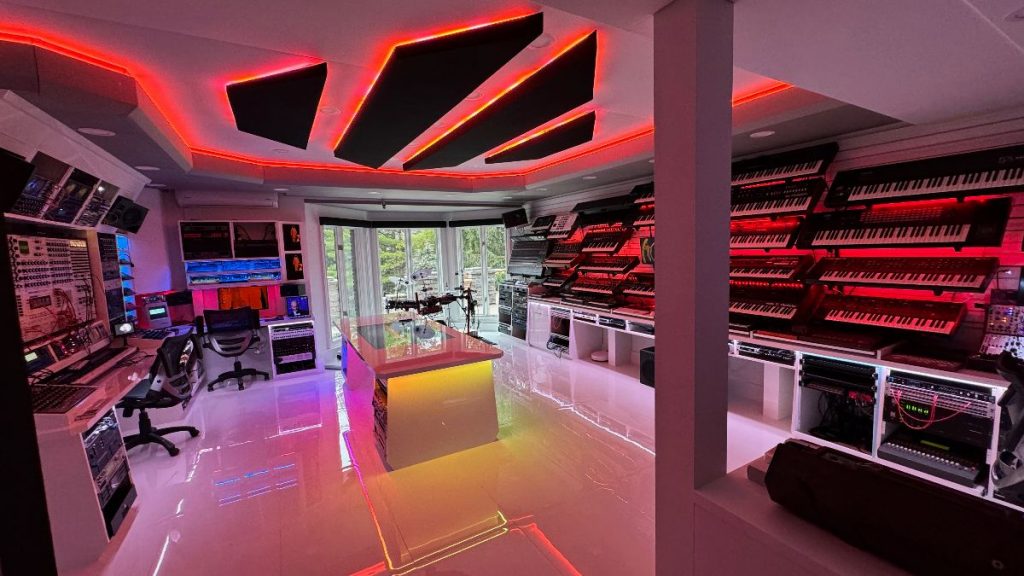
SANCTUM — The studio’s second main room, home to multiple dedicated workstation areas including Colossus, Archive, MXR, Synth Engine, and the Buchla Station with a central island affectionately dubbed the Spacebar. SANCTUM connects directly to AIR_LOCK, the studio’s adjoining vocal/iso booth.
Each area within the room features a unique set of gear for specific workflows as described below.
The Colossus bay is built around the centerpiece of the Analogue Solutions Colossus Slim, surrounded by several Doepfer and TipTop Eurorack cases, Cwejman S1 mkII, Moog Voyager, Nord Rack 2, Access Virus TI, Analogue Solutions Leipzig-S, Roland XV-5080, Ensoniq ESQ-m, Roland D-550, Korg Triton Rack, Casio VZ-10M, several Behringer rack synths & some of Klayton’s favorite rack samplers – a maxed out E-MU E4 Platinum, Akai S5000, Roland S2000 and S760 with SCSI drives, CD-ROMs & SCSI2SD arrays, an Ensoniq ASR-10, and the first sampler he ever owned, the Ensoniq EPS-16+. The Colossus bay also includes a range of Roland Boutique synthesizers, a pair of SSL XLogic Superanalogue Channel units, Avalon VT747sp and the Nektar Impact 88 key controller. Audio from the Colossus bay and the Archive bay are routed to a Mackie Onyx 1620i mixer connected to the main patchbay via its analog outs and to a legacy Trashcan Mac via Firewire for 16 channels of audio into Cubase.
The Archive bay is built around legacy machines including Klayton’s original 1990 Mac Classic running Opcode’s Vision 1.32 software, which he used to compose his first 5 albums for his projects Circle of Dust and Argyle Park. The Archive bay also contains more Roland Boutique synthesizers, Behringer 303’s, and Ensoniq Mirage (connected to the Mac Classic to run the Sound Lab editor software,) a Sequential Prophet 2002 rack sampler, Novation Bass Station Rack, TC Helicon Voiceworks Plus, E-MU Proteus/1 & Turbo Phat and Alesis D4. There are a pair of Mac G5 towers running legacy versions of Pro Tools from various periods of Klayton’s career which allows him to recall sessions from older albums and/or create something new using the hardware & software of those eras.
The MXR bay contains several racks full of outboard gear, running to an array of TT patchbays which also connect to Klayton’s Mackie 32•8 Mixer (used on the debut Celldweller album,) a Sherman Filterbank 2, Alesis Quadraverbs & Midiverbs, Korg A1, Boss SE-70 (Klayton heavily used the vocoder algorithm on his early Circle of Dust albums,) DBX 160X, ASHLY SC-50, Aphex Aural Exciter, Roland SDE-1000 & SRV-2000, Zoom 1204, ART SGE Mach II & ProVerb, Ensoniq DP/4, TC Electronic Fireworx, Alesis 3630, DeltaLab Effectron II and Washburn WD-700.
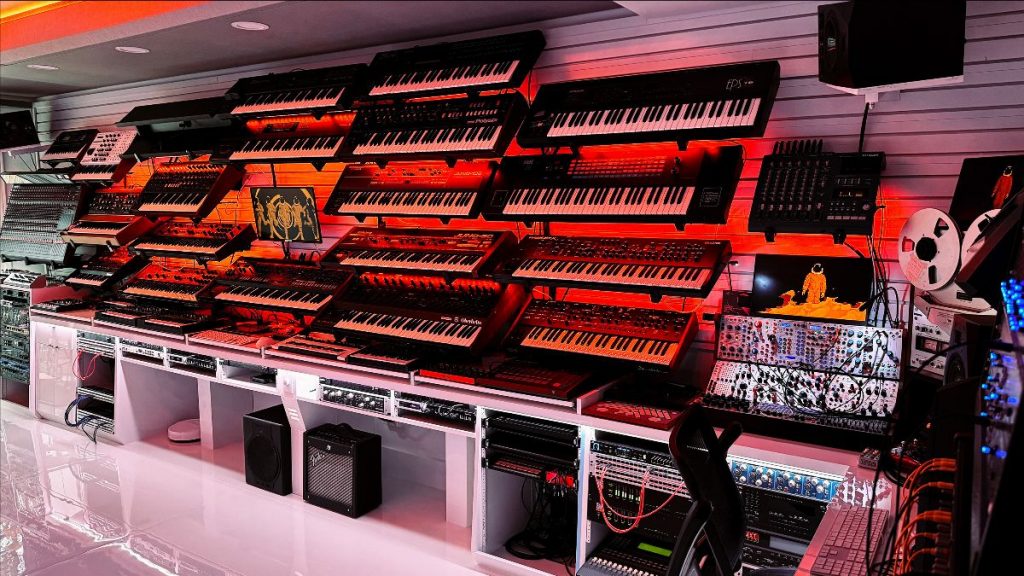
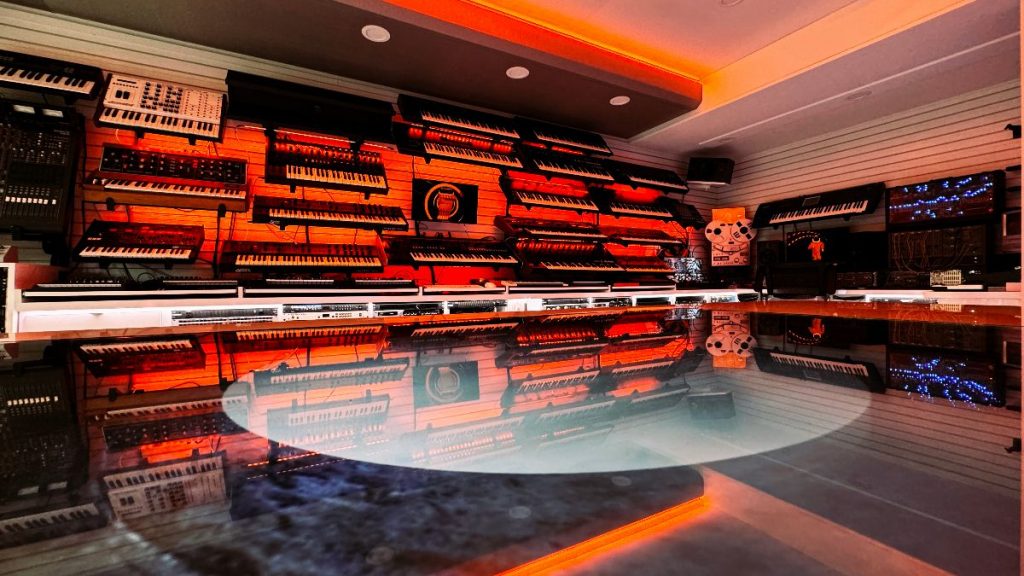
Synth Engine is a wall of hardware synthesizers & samplers, all running to the TT bays which can be patched to the Mackie 32•8 or run anywhere else in the studio. “I love the sound of the Mackie,” Klayton states. “I frequently run synths to it, oftentimes using the Mackie EQ section, then send them to FX from the MXR bay and into my main rig in CMD_CTRL.” Synths and samplers include a Roland Juno-60 & Juno-106, dual Prophet 600’s, the Prophet-X & Prophet 2000 samplers, a MiniMoog, Analogue Solutions Telemark-K, IK Multimedia Uno Synth Pro, Korg ARP Odyssey, EX-800, M1, Volcas, Mono/Poly & PolySix (with Kiwi Upgrade,) Novation Bass Station II & AFX Station, Roland Jupiter X, Yamaha DX-7, Oberheim OB-Xa with MIDI mod, Dave Smith Instruments OB-6, Arturia MiniBrute 2 S, MiniBrute & MicroBrute, Yamaha Reface CS, Elektron SID Station, 3 Oberheim Matrix 1000’s, Ensoniq EPS-16+ keyboard sampler & Klayton’s very first keyboard he washed dishes at an Italian restaurant to afford – the Roland D-20. There are several workstations and drum machines in Synth Engine including Roland TR-8 with the WaveR8 card, Roland TR-8S, a circuit bent Alesis HR-16, a modded Kawaii R-100, Boss DR-550 mkII, an Elektron Octatrack and Akai MPC Live. Also stationed in Synth Engine are small combo amps by the likes of Line 6, Fender & Peavy.
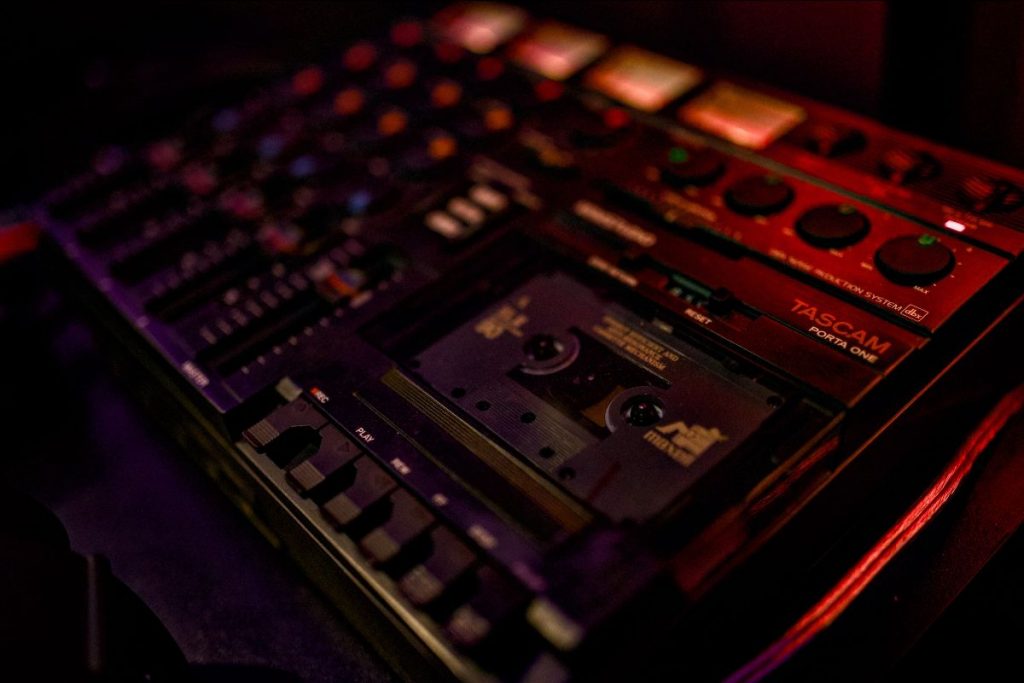
Buchla Station orbits around a Buchla 200e series rig, along with a series of additional legacy gear. His original Power Mac G4 running Pro Tools 5 allows him to resurrect software and sessions of a bygone era. Samplers include an E-MU E4XT Ultra, EPS-16+ and Yamaha A5000 attached to a switchable SCSI2SD array. Several Electrix FX processors round out the effects. A Korg Triton keyboard is used as a soundsource and controller. There’s a Eurorack setup, ~200HP, a DSI Evolver, TTSH ARP 2600 clone built by Low-Gain Electronics, an original Roland System 100M and a Dewanatron Swarmatron. There are several tape based systems – 4-track cassette recorders including the Tascam 424 mkIII, a circuit bent cassette recorder by Battery Operated and an Akai reel-to-reel machine Klayton’s grandfather left to him. A Yamaha Pro Mix 01 allows local mixing which can be recorded back into the G4 or his second trashcan Mac system, connected to a MOTU Ultra Lite AVB interface, while several TT bays link the audio to and from the rest of the studio.
The Spacebar island features an integrated 55” LED screen and 4 bays for additional rack mount hardware and expansion. More legacy gear like the Fostex RD-8 ADAT machines, Sony Timecode generator and legacy MIDI Interfaces live here.
SANCTUM also has an open bay for drums featuring a custom Pintech e-drum kit connected to an Alesis Trigger IO brain. Klayton also still has the first drum kit he ever purchased, a used Tama Superstar kit with Zildjian cymbals.
AIR_LOCK, the studio vocal/iso booth, houses a Neumann M149 mic. Since Klayton also engineers all of his own music, he has an Avalon ST737 in the booth for hands on tweaking while cutting vocals, recording stringed instruments or trash cans. His mic locker contains mics from AKG, Rode, Sennheiser, Slate, and more.
SALVAGE_BAY
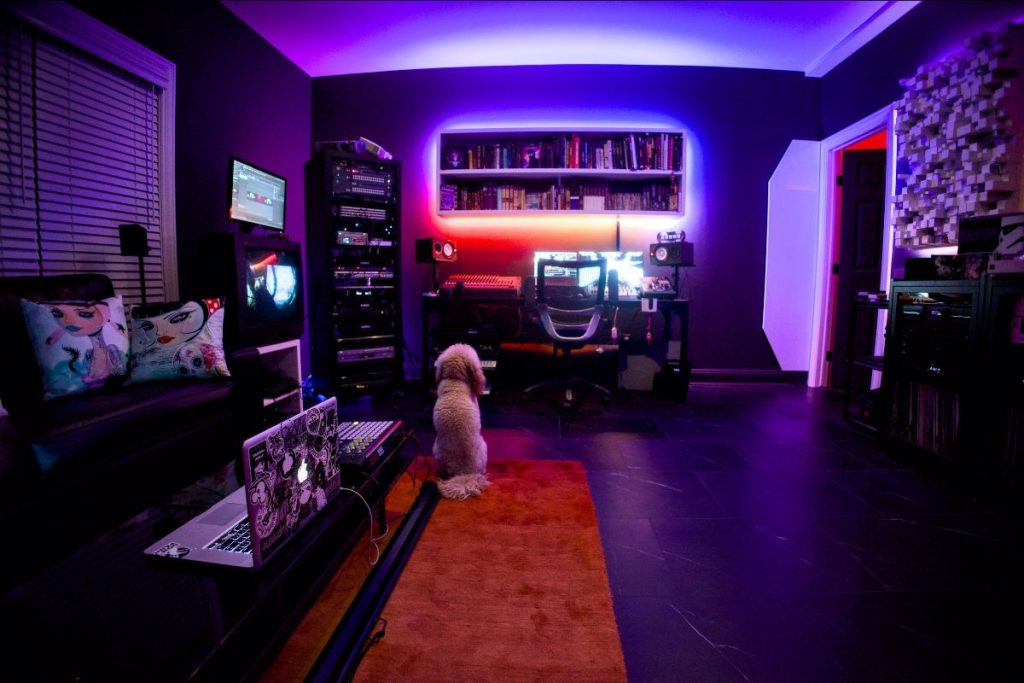
The SALVAGE_BAY is a distinctly different room both in function and aesthetic. Part creative space, part living archive, this room is where decades of legacy video & photography tech converge into a functioning creative tool, alongside Klayton’s personal collection of media, music, and books.
The room is built around racks of vintage video processing and routing gear used for mixing and mashing video as well as analog video glitch art, including a Roland Edirol V-8 video mixer, several Kramer video matrix switchers, a Prime Image 50 III TBC, and a lineup of boutique circuit-bent and eclectic glitch art video units from the masterminds at BPMC, LoFi Future, Mezkalin, PUSHKAR BRAND, Sound Study Modular, Melted Electronics, Schele, and Gieskes. The destinations for these devices are across an array of CRT TVs, Sony Watchman portable TVs, projectors, and projection screens for feedback, glitching and display. Several Ableton APC-40’s allow for live triggering of visuals in Resolume Arena in tandem with audio.
Rounding it all out is a working collection of nearly every consumer video and audio format of the past five decades, including:
• Video formats across VHS, VHSC, Hi-8, 8mm, Digital 8, Laserdisc, DV and Mini-DV
• Analog audio tape across reel to reel, cassette, and 8-track, TASCAM 4-track recorders routed in and out of a TASCAM M-216 mixer
Klayton also keeps a working motion and still photography station in the room, with a mix of film and digital cameras alongside Epson and UMax scanners used for scanography art.
The listening side of the room leans just as retro, anchored by a hi-fi setup that includes receivers, cassette decks, Minidisc players, Yamaha MD8 mini-disc 8 track recorder, VCRs, a Pioneer 8-track, Akai reel-to-reel, record players and his original Conion boombox he purchased in the 1980s.
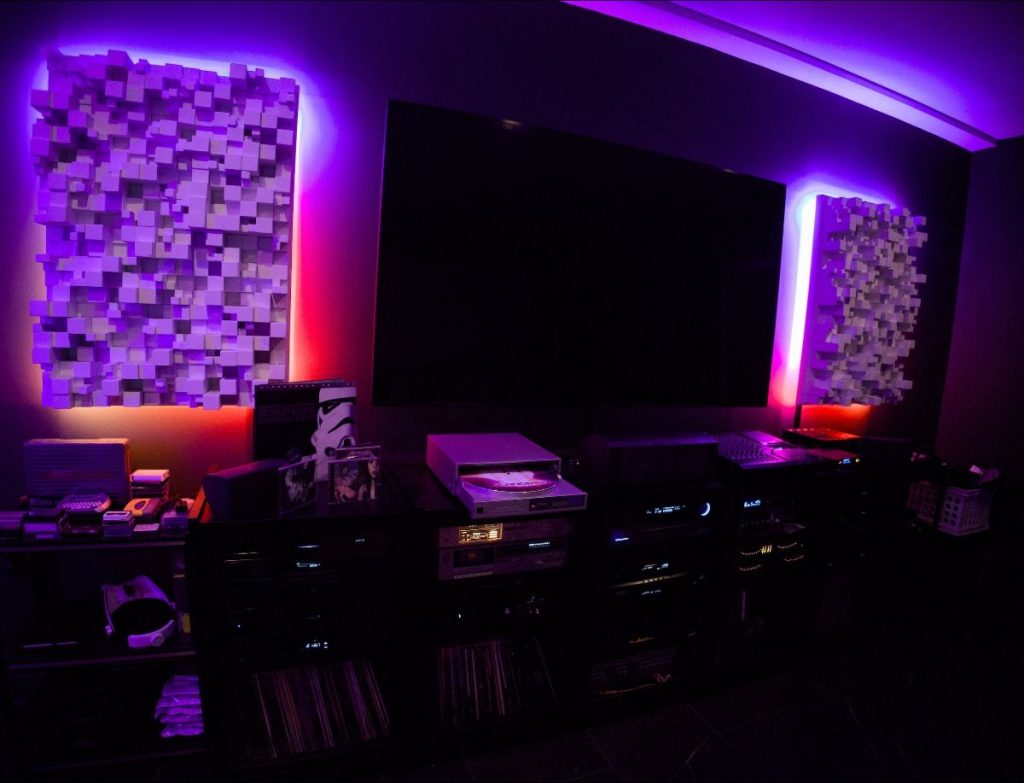
Beyond the gear, SALVAGE_BAY functions as Klayton’s personal archive. Shelves and cabinets hold his collection of laserdiscs, vinyl, and collectible books, alongside his video archive spanning his career, from early ‘90s Circle of Dust live footage through 2003 and 2012 era Celldweller shows and studio sessions, up through present day. Much of it lives on the same formats used to capture it, making the room as much a functioning tape and disc library as it is a production space.
While Blackstar is a visual powerhouse with the room design and impressive array of physical gear, Klayton relies on a number of key software components to drive the studio, including Cubase, FL Studio, Ableton Live, Logic Pro, utilizing Metagrid Pro across dual iPads in CMD_CTRL, along with plugins and sound libraries from FabFilter, Native Instruments, Izotope, SoundToys, Arturia, D16 Group, Joey Sturgis Tones, Drum Forge, Eventide, Heavyocity, Impact Soundworks, Polyverse, Kilohearts, Korg, Krotos, Ohm Force, Sugar Bytes, Tal, XLN Audio, Zynaptiq.
Blackstar becomes the creative home for two major upcoming releases: the next Celldweller studio album, GOD MODE, and the next Scandroid album, Lost Horizon, both currently in active production.
Watch Klayton’s live modular performance of “Orbital Drift” under his project FreqGen, filmed entirely inside of Blackstar in the CMD_CTRL room using his modular eurorack wall.